


Intent Data + AI: The B2B Marketing Strategy to Compress Sales Cycles and Win More Deals
B2B companies that combine intent data with AI agents can shorten sales cycles by 17 days or more, improve win rates, and reduce cost per lead by up to 38%. This digital marketing approach creates a real-time buyer awareness system that identifies prospects at peak decision-making moments, enabling sales teams to intervene with precision timing rather than relying on traditional prospecting. TruLata builds these unified intent and AI systems for B2B growth teams across industries.
The old model of digital marketing for B2B relied on volume: more calls, more emails, more campaigns pushed into the market hoping to catch someone at the right time. That model is breaking. Buying committees now average six to ten stakeholders. Self-directed research dominates the early funnel. And sales cycles have lengthened for teams that have not adapted. But a different pattern is emerging. B2B organizations running unified intent data and AI-assisted workflows are pulling decisively ahead on pipeline efficiency, booking 2.4x more meetings per rep while spending less per lead, according to Salesforce's State of Marketing 2026 report.
This is not a marginal improvement. It is a structural shift in how B2B marketing strategy operates. And the teams that understand how to layer intent signals with AI-driven execution are compressing deal timelines in ways that reshape unit economics entirely.
What Is Intent Data and Why Does It Matter for Digital Marketing?
Intent data captures the digital signals that reveal when a company or individual is actively researching a problem, solution, or product category. These signals come from multiple sources: content consumption patterns, search behavior, website visits, product comparison activity, review site engagement, and social interactions.
The distinction that matters for B2B marketers is this: intent data tells you who is in-market before they raise their hand. Traditional digital marketing waits for a form fill, a demo request, or an inbound call. Intent data surfaces buying behavior while it is still anonymous, giving your team a window to engage prospects during the research phase rather than after a competitor has already shaped their thinking.
Research from Gartner's B2B sales research projects that 95% of seller research workflows will begin with AI by 2027, up from less than 20% in 2024. The transition is already well underway. And the data supports adoption: 68% of marketers using intent data report higher ROI, and 96% report overall success with intent-driven programs.
First-party vs. third-party intent signals
First-party intent data comes from your own properties: website visits, content downloads, email engagement, and product usage patterns. Third-party intent data comes from external sources that track research behavior across the broader web, including publisher networks, review sites, and search activity.
The most effective content marketing and digital marketing programs layer both. First-party signals tell you who is engaging with your brand. Third-party signals tell you who is researching your category, even if they have never visited your site. The combination creates a comprehensive picture of buyer readiness that neither source can provide alone.
How Does AI Transform Intent Data Into a Real-Time Buyer Awareness System?
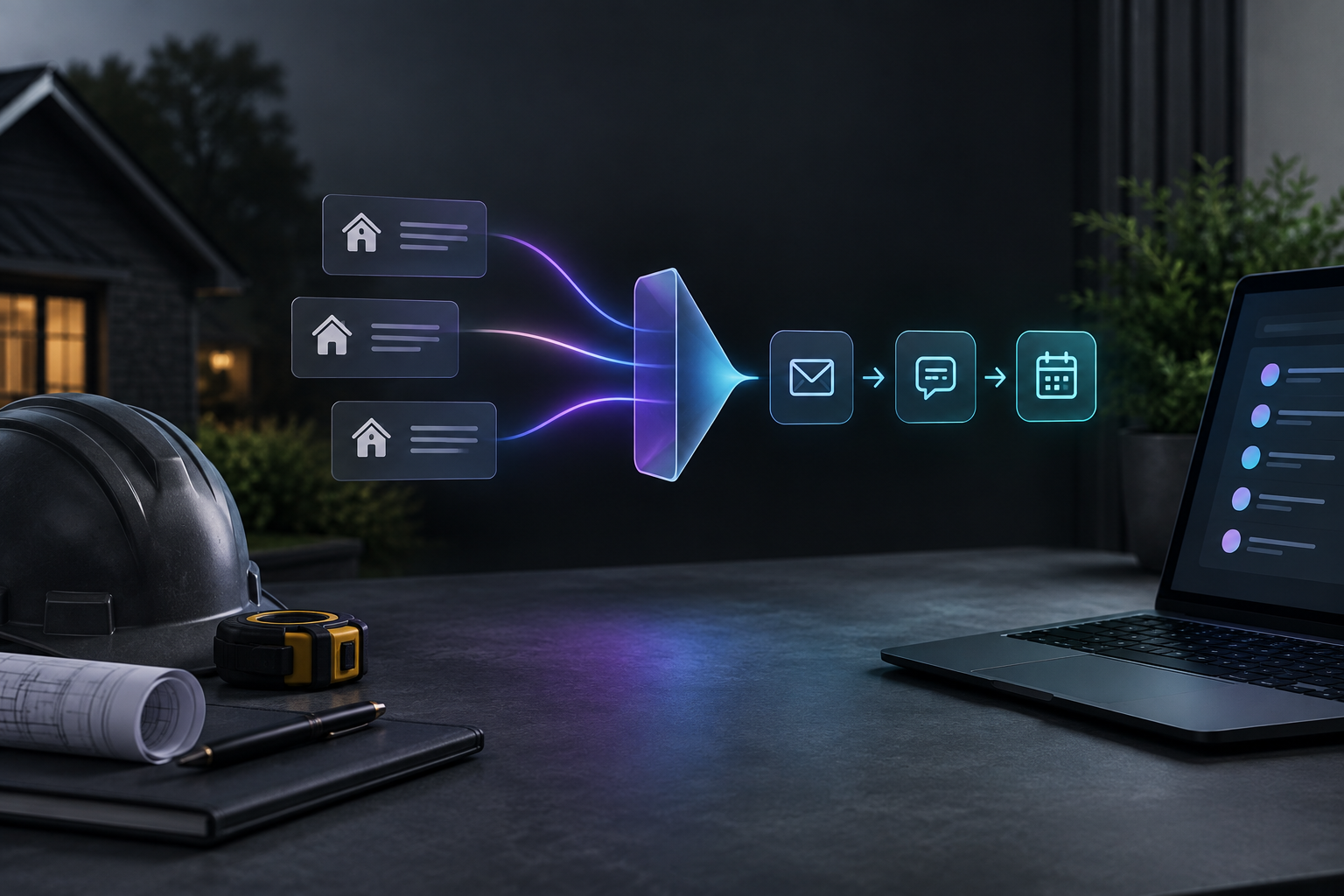
Intent data without AI is a firehose. Thousands of signals per day, varying in quality, relevance, and timing. The challenge is not collecting signals. It is synthesizing them into actionable intelligence fast enough to matter.
From firehose to the right move
- Intent signals
- Firmographic fit
- Technographic data
- Engagement history
- Trigger events
- Personalized outreach
- An alert to the rep
- Adjusted ad targeting
- The right content delivered
AI agents solve this by performing three critical functions in real time:
- Signal layering and scoring: AI combines intent signals with firmographic fit, technographic data, historical engagement patterns, and trigger events (funding rounds, leadership changes, expansion announcements) to separate actionable interest from noise. Intent data alone identifies interest. Combining it with trigger signals and firmographic fit identifies actionable interest.
- Pattern recognition across the buying committee: Modern AI can detect when multiple individuals from the same account are researching related topics, a strong indicator that a buying committee is forming. This cluster detection is nearly impossible to do manually at scale.
- Automated response orchestration: When AI identifies a high-fit account showing intent surges, it can trigger personalized outreach sequences, alert sales reps, adjust ad targeting, and modify content delivery without any manual intervention.
The result is a system that operates continuously, processing signals, scoring opportunities, and activating the right response at the right moment. Revenue intelligence platforms using this approach have shortened complex B2B sales cycles by roughly 55% by surfacing deals at the optimal engagement point.
Why Are Sales Cycles Getting Shorter for AI-Native Teams (and Longer for Everyone Else)?
The data reveals a widening gap. B2B SaaS programs running unified intent and ABM stacks reduced their average sales cycle by 17 days year over year. Meanwhile, non-ABM programs saw their cycles lengthen by 9 days as buyer caution increased. That is a 26-day swing between the two approaches.
B2B SaaS programs, year over year, as cited in this post.
Several factors drive this divergence:
Timing precision eliminates wasted cycles. Traditional prospecting contacts accounts on the sales team's schedule, not the buyer's. Most of those touches land when the prospect is not actively evaluating, creating friction and extending timelines. Intent-driven outreach reaches prospects during active research windows, when they are most receptive to engagement.
Relevance accelerates decision-making. When your content marketing and sales messaging directly address the specific topics a prospect is researching, you collapse the education phase. Instead of generic capabilities presentations, your team leads with solutions to the exact problem the buyer is trying to solve right now.
Multi-threading happens earlier. AI-powered intent systems detect buying committee formation patterns, enabling sales teams to engage multiple stakeholders simultaneously rather than sequentially. This parallel engagement compresses the internal consensus-building process that often stalls deals.
As Harvard Business Review's research on B2B sales has consistently shown, the vendor that shapes the buyer's vision of the solution early in the process wins a disproportionate share of deals. Intent data combined with AI gives your team the ability to be that vendor, consistently.
What Does a Practical Intent Data + AI Marketing Strategy Look Like?
Implementing this approach does not require ripping out your existing tech stack. It requires building an intelligence layer that sits on top of your current systems and coordinates them around buyer signals. Here is the framework that produces results.
- Define the profile by behaviorStart from the intent patterns behind your last 50 closed won deals
- Build multi source signalsFirst party visitors, third party intent, CRM engagement, trigger events
- Score and route with AILate stage signals to sales, early research to nurture
- Match content to the signalThe asset that answers the topic the account is researching
- Close the loop with salesTopics, pages and stakeholders in the rep's own workflow
Step 1: Define your ideal customer profile with behavioral precision
Move beyond firmographic-only targeting. Layer in behavioral indicators: what content topics signal purchase intent for your solution, what research sequences correlate with closed deals, what engagement thresholds separate tire-kickers from serious evaluators. Analyze your last 50 closed-won deals to identify the common intent patterns that preceded them.
Step 2: Build a multi-source signal infrastructure
Integrate first-party website visitor identification, third-party intent data from platforms like Bombora or Factors.ai, CRM engagement data, and trigger event feeds. The goal is comprehensive signal coverage, not reliance on any single source. Platforms that combine account intent with contact-level data provide the most actionable intelligence for sales teams.
Step 3: Deploy AI scoring and routing
Configure AI models to score accounts based on combined intent signals, fit criteria, and timing indicators. Establish routing rules that direct high-scoring accounts to the appropriate response: immediate sales outreach for accounts showing late-stage buying signals, automated nurture sequences for early-stage research activity, and content marketing engagement for accounts exploring the problem space.
Step 4: Create signal-matched content and messaging
Develop content assets mapped to specific intent signals. When AI detects that an account is researching a particular topic cluster, your content marketing engine should deliver relevant assets automatically. This is where most teams underinvest. The intelligence layer is only as effective as the content it delivers. Build messaging frameworks for each stage of the research journey.
Step 5: Close the loop with sales enablement
Equip sales reps with intent intelligence directly in their workflow. When a rep receives an alert about a high-intent account, they should see the specific topics being researched, the pages visited, the content consumed, and the other stakeholders from that account who are showing activity. This context transforms the first sales conversation from a cold introduction into a consultative discussion.
How Do You Measure the Impact of Intent-Driven Digital Marketing?
Avoid the trap of measuring intent programs with traditional marketing metrics alone. The value shows up across the full revenue cycle. Track these specific indicators:
- Sales cycle compression: Compare average days from first touch to close for intent-sourced opportunities versus non-intent opportunities. The 17-day reduction benchmark gives you a target.
- Win rate differential: Measure close rates for deals where the sales team engaged during an active intent surge versus deals engaged through traditional prospecting.
- Cost per qualified meeting: AI-assisted SDR workflows should show measurable improvement. The 38% reduction in cost per lead and 2.4x meeting increase reported by Salesforce provides a reasonable benchmark for mature programs.
- Pipeline velocity: Track how quickly deals move through each stage when supported by intent intelligence versus unaided progression.
- MQL-to-SQL conversion rate: Gartner highlights MQL-to-SQL conversion as a core pain point for B2B organizations. Intent-qualified leads should convert at measurably higher rates than traditionally scored leads.
One important caveat: do not claim revenue lift from a two-week test when your normal sales cycle is six months. Keep pilot cohorts tagged and measure over a full cycle horizon. And keep rejected and duplicate signals in the denominator. Removing bad signals after the fact makes any vendor or program look artificially accurate.
Buying intent signals are not permission to blast generic outreach.
What Mistakes Should B2B Teams Avoid When Implementing Intent Data Programs?
The most common failure mode is treating intent data as a prospecting list rather than an intelligence system. Buying intent signals are not permission to blast generic outreach. They are context for relevant, timely engagement. Teams that simply hand intent data to SDRs without messaging frameworks, content assets, or AI-driven prioritization see minimal improvement.
Other critical mistakes include:
- Relying on a single intent source: No single platform captures the full picture. Layer multiple signal types for accuracy.
- Ignoring the content layer: Intent intelligence without signal-matched content marketing is a car without fuel. You know where to go but cannot get there.
- Failing to align sales and marketing on signal definitions: If marketing considers a topic-level intent surge as "sales-ready" but sales expects contact-level engagement, the handoff will fail every time.
- Over-automating early: Start with human-in-the-loop processes to validate signal quality before scaling automation. This builds confidence in the data and reveals patterns that improve AI models.
Mistakes that stall an intent program
- Relying on a single intent sourceLayer multiple signal types
- Ignoring the content layerSignal matched content, or you know where to go and cannot get there
- Sales and marketing define signals differentlyAgree what sales ready means before the handoff
- Over automating earlyHuman in the loop first, then scale
Why This Marketing Strategy Represents the Next Competitive Moat in B2B
The gap between intent-driven and traditional B2B digital marketing programs is widening, not narrowing. As AI capabilities mature and intent data sources proliferate, early adopters compound their advantage through better data, better models, and better playbooks. Teams that delay adoption are not standing still. They are falling behind as their sales cycles lengthen and competitors engage their prospects first.
The companies winning in 2026 are not necessarily spending more. They are spending with precision, engaging the right accounts at the right moment with the right message. That precision comes from combining intent data with AI in a system that operates continuously and improves with every signal it processes.
TruLata helps B2B companies design, build, and optimize intent-driven marketing strategy and AI-powered growth systems that compress sales cycles and improve win rates. If you are ready to move beyond traditional prospecting and build a real-time buyer awareness engine, contact TruLata to discuss how we can architect this system for your team.