


Marketing Automation Software for HVAC Companies: Stop Losing Leads to Spreadsheets
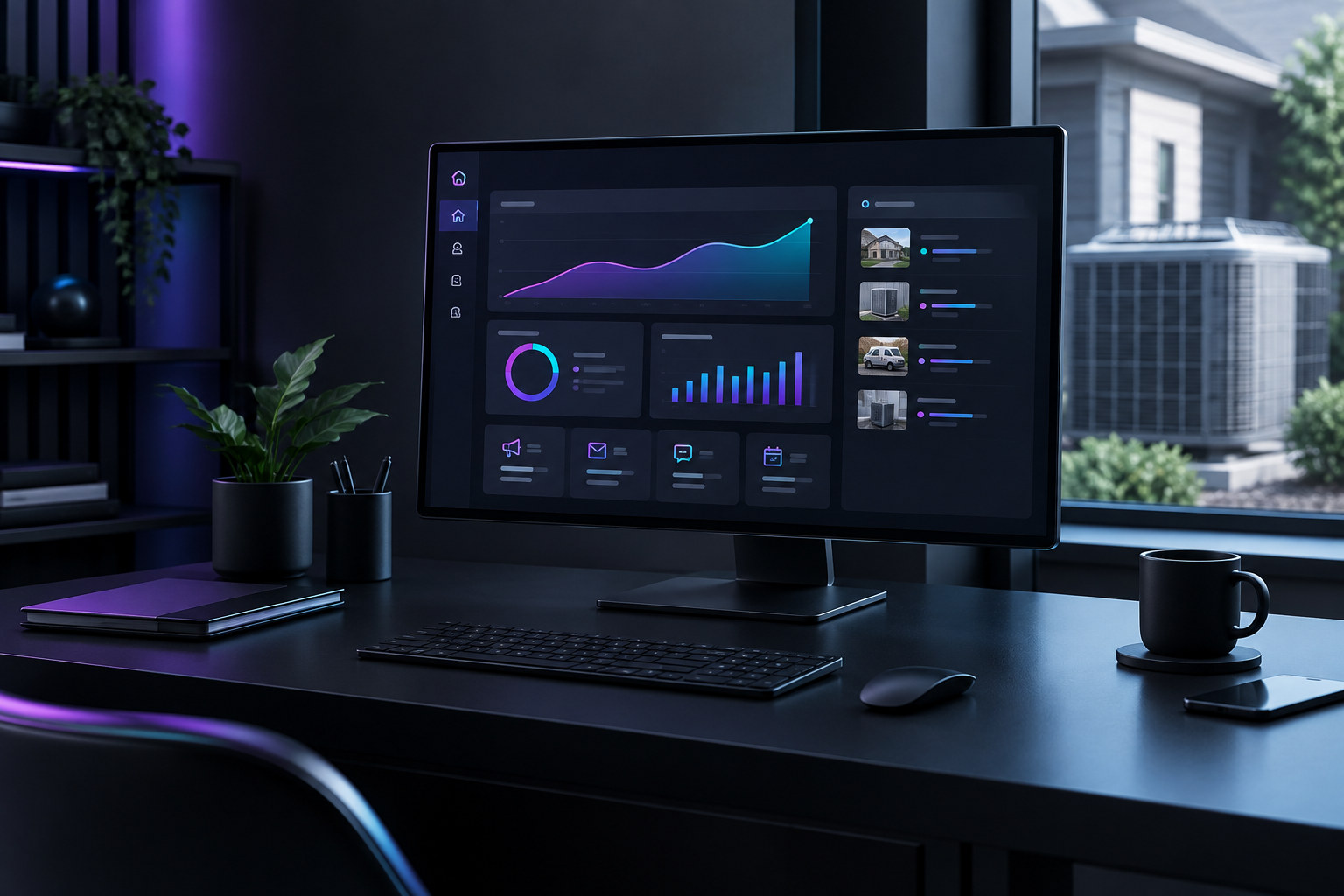
Marketing automation software for HVAC companies captures every inbound lead from forms, calls and ads, scores it against your service criteria, and triggers follow up within minutes without anyone retyping a name. TruLata builds this into TruLata, one screen that runs marketing for local service businesses across the United States and shows what it produced.
Most HVAC owners do not lose leads because their marketing is weak. They lose leads because a homeowner filled out a form at 8:40 PM on a Tuesday, the notification landed in a shared inbox nobody opened until Thursday, and by then the job went to whoever called back first. The spreadsheet did exactly what spreadsheets do: it recorded the loss.
How a spreadsheet loses an HVAC job
- A homeowner fills out your form
- The notification sits in a shared inbox
- Someone opens it. The job went to whoever called back first
Why are HVAC companies still tracking leads in spreadsheets?
Because spreadsheets are free, familiar, and they work fine at ten leads a month. The problem is that they do not scale, and they do not act. A row in a sheet never texted a homeowner back.
The structural issue is fragmentation. Most HVAC contractors running installation businesses are doing their lead management in three or four places: a shared spreadsheet for the list, a separate CRM for follow up, a lender portal for financing, and a text chain for handoffs to ops. Every gap between those tools costs a deal.
Here is what that fragmentation actually looks like in a typical week for an owner or office manager:
- Copying form submissions from email notifications into a tracking sheet
- Cross referencing call logs against the sheet to catch duplicates
- Manually tagging which leads came from Google Ads versus organic versus a referral
- Building a Monday morning summary of last week's lead count from memory and screenshots
- Chasing down technicians to find out whether a quote ever got sent
Add it up and 10 or more hours a week disappears into data entry that produces no revenue. That is a quarter of a full time position spent maintaining a record of work rather than doing it.
The hidden cost is not the hours, it is the delay
Manual entry introduces lag between the moment a homeowner raises their hand and the moment someone responds. In emergency HVAC work, that lag is the entire competition. A no cool call in July is won by speed, not by brand. When a lead sits in an inbox overnight, you are not competing on price or reviews anymore. You already lost.
Lead management in three or four places
- A shared spreadsheet for the list
- A separate CRM for follow up
- A lender portal for financing
- A text chain for handoffs to ops
- 10 or more hours a week of data entry
- A quarter of a full time position
- A no cool call answered too late
What does marketing automation software actually do for an HVAC business?
Marketing automation software handles the repetitive mechanics of lead handling so your people handle the conversations. The category is simple enough: marketing automation software helps businesses automate repetitive tasks such as sending email drip campaigns, lead scoring, follow ups, and more, while capturing campaign metrics that let businesses measure ROI and attribute revenue.
Translated into HVAC terms, a working automation setup does four things:
1. Captures every lead in one place
Web forms, landing pages, Google Ads lead forms, click to call, chat and service request pages all feed a single record. No inbox archaeology. This is the foundation of lead tracking counted from your own forms, which means the number you see is the number that actually arrived, not an estimate pulled from a platform that has its own reasons to inflate it.
2. Qualifies before a human touches it
Not every lead is worth a truck roll. Automation can sort by service type (repair, replacement, maintenance plan), by ZIP code against your service radius, by equipment age if you ask for it, and by urgency. Zoho's marketing automation platform, for example, is built around lead generation, customer journey management, lead qualification, customer behavior tracking, real time analytics and lead nurturing. The principle carries over cleanly to contractor work: a replacement inquiry in your core territory should route differently than a maintenance question forty minutes outside it.
3. Follows up on a schedule that does not depend on anyone remembering
An automated sequence sends the confirmation text immediately, the quote reminder at 48 hours, the seasonal tune up offer in the spring, and the financing information to anyone who asked about a full system. None of it requires a human to open a calendar reminder.
4. Reports what worked without a manual rebuild
The reporting layer is where most HVAC companies give up. Automation should tell you which campaign produced which booked job. If you have to rebuild that report by hand every month, you have bought a tool, not a system.
What a working setup does
Capture
- Forms, ads, calls and chat in one record
Qualify
- Service type, ZIP against your radius, urgency
Follow up
- Confirmation now, quote reminder at 48 hours, spring tune up offer
Report
- Which campaign produced which booked job
How do you set up HVAC lead tracking automation without a full time marketer?
You do it in stages, and you start with capture, not with clever nurture sequences. Here is a practical sequence that a small office team can execute over a few weeks.
Step 1: Inventory every place a lead can enter
Write down every entry point: the contact form, the service request page, the phone number on your Google Business Profile, the phone number in your ads, the chat widget, the Facebook form, the Angi or Thumbtack inbox. Most companies find seven to twelve. You cannot automate what you have not listed.
Step 2: Standardize the fields you collect
Every form should collect the same core set: name, phone, email, address or ZIP, service type, and urgency. Inconsistent fields are the single biggest reason automation breaks. If one form calls it "Service Needed" and another calls it "Issue Type," your routing rules will fail silently.
Step 3: Route by service type and territory
Build simple, boring rules first. Emergency repair inside the service radius goes to dispatch immediately with an SMS alert. Replacement inquiry goes to the comfort advisor queue. Out of area goes to an automated referral response. Resist the urge to build twenty branches on day one.
Step 4: Set response time targets and instrument them
Pick a number you will actually hold: first contact within five minutes during business hours, within thirty minutes after hours via automated text with a booking link. Then measure it. A target you do not measure is a preference.
Step 5: Connect the automation to your existing field tools
Your dispatch and job management software already exists. Marketing automation should feed it, not replace it. The specialist job description for this work describes it accurately: integrating CRM systems, automating lead nurturing workflows, and developing sales enablement processes, all while ensuring seamless performance tracking and reporting. Check your TruLata integrations before you commit to any platform, because a tool that cannot talk to your scheduling system just creates a second spreadsheet with better fonts.
Step 6: Review the data weekly, not quarterly
Ten minutes every Monday. Lead count by source, response time, booked rate, and any form that submitted zero leads (which usually means it broke). This is where live marketing data, refreshed when you open it beats a monthly PDF that describes a month you can no longer influence.
Simple, boring routing rules first
- Emergency repair inside the service radiusDispatch, immediately, with an SMS alert
- Replacement inquiryThe comfort advisor queue
- Out of areaAn automated referral response
- After hoursAn automated text with a booking link within thirty minutes
What should HVAC owners look for in contractor marketing automation?
The market is crowded and most of it was built for software companies with long sales cycles and inside sales teams. Guidance from one buyer's guide is that for small businesses the right pick is typically an all in one sales and marketing platform that includes a CRM, with visual automation, lead scoring and top tier deliverability. For HVAC specifically, add these filters:
- Speed to first response. Can it text a homeowner within sixty seconds of a form submit, including after hours?
- Territory logic. Can it route by ZIP code without a developer?
- Seasonality. Can you run a spring tune up campaign and a fall heating campaign from saved templates rather than rebuilding both every year?
- Attribution you can defend. When you spend on Google Ads, can you see which clicks turned into booked jobs? Google Ads reporting with a daily account watch matters more in HVAC than in almost any other local trade, because peak season spend moves fast.
- Owner usable interface. If it needs a certified admin to change an email subject line, it is the wrong tool for a fifteen person shop.
One screen beats five logins
The reason fragmentation persists is that each individual tool looks reasonable in isolation. The cost only shows up in the seams. Consolidating capture, qualification, follow up and reporting into TruLata removes the seams, which is where leads were falling through in the first place. The same principle applies whether you run twelve trucks or three.
A system you half trust gets abandoned by August.
How do you know the automation is working?
Four numbers, reviewed weekly, tell you almost everything:
- Total leads by source. Counted from your own forms and call tracking, not from platform estimates.
- Median first response time. Measured in minutes, not "same day."
- Lead to booked appointment rate. Segmented by service type, because repair and replacement behave differently.
- Cost per booked job by channel. The only number that tells you where the next dollar goes.
If your current system cannot produce those four numbers without someone building a report by hand, that is your answer. The deeper version of this argument, including how the same failure pattern shows up across plumbing, electrical and roofing, is covered in our guide to marketing automation for contractors who keep losing leads to manual systems.
Start with one season, not one year
Do not try to automate everything before cooling season. Automate capture and first response, run it through one peak, and measure. Nurture sequences, review requests and reactivation campaigns can come after you trust the foundation. A system you half trust gets abandoned by August.
See what your marketing is actually producing
If you are running an HVAC company on a spreadsheet, the fastest improvement available to you is not more ad spend. It is never losing a lead that already raised its hand. TruLata's marketing automation software for service businesses puts capture, qualification, follow up and reporting on one screen, so your technicians stay on jobs and your office stops retyping names.
Book the live demo and bring your current lead sheet. We will show you exactly where the gaps are.