

AI Agents for Lead Qualification: The B2B Marketing Automation Strategy Replacing Manual SDR Work
Your SDR team is spending 65% of their day on tasks that never touch a qualified buyer. They research prospects, write first-touch emails, log CRM data, chase no-shows, and manually score leads using gut instinct and outdated rules. Meanwhile, your competitors are deploying AI agents that qualify inbound leads in under 90 seconds, route high-intent prospects directly to closers, and operate around the clock without burning out. This is not a future-state prediction. It is the operational reality reshaping B2B digital marketing and sales development in 2026. And the companies making this shift are seeing 1.5x or greater productivity gains, faster pipeline velocity, and dramatically lower cost per qualified opportunity.
This article breaks down exactly how applied AI agents work for lead qualification, the specific workflows replacing manual SDR tasks, the ROI metrics that justify the investment, and how to build this capability into your own go-to-market infrastructure.
Why Traditional SDR Models Are Breaking Down
The traditional sales development model was built for a different era. It assumed that more reps meant more pipeline, that manual research was the only way to personalize outreach, and that speed-to-lead was a function of headcount. None of those assumptions hold in 2026.
SDR turnover remains one of the highest of any role in B2B sales, with average tenure hovering around 14 months. Training costs are significant. Ramp time eats into quota attainment. And the core problem persists: most SDRs spend the majority of their working hours on activities that do not directly generate revenue.
According to McKinsey's research on AI in sales applications, AI agents can make teams at least 1.5x more productive, with humans shifting from repetitive content creation and data entry to refinement, live client interaction, and strategic decision-making. That productivity multiplier is not theoretical. It reflects what organizations are already experiencing when they replace manual qualification workflows with autonomous AI agents.
The question for B2B leaders is no longer whether AI agents can do this work. It is whether your current marketing strategy and sales infrastructure can support the transition.
What AI Agents for Lead Qualification Actually Do
There is an important distinction between AI sales assistants and AI agents (sometimes called AI digital workers). AI sales assistants help human reps with discrete tasks: research, writing, prioritization, or sequence setup. AI agents are designed to execute larger job functions with minimal manual involvement. For lead qualification, that distinction matters enormously.
An AI sales assistant
- Helps a rep with discrete tasks
- Research, writing, prioritization, sequence setup
- The rep still does the job
An AI agent
- Executes a larger job function
- Engages, asks qualifying questions, scores in real time
- Routes the lead to a rep with full context
Inbound Lead Qualification and Speed-to-Lead
When a prospect fills out a form, downloads a whitepaper, or engages with your content marketing assets, the clock starts. Research consistently shows that responding to inbound leads within five minutes dramatically increases conversion rates. According to a Harvard Business Review study on lead response times, companies that contact leads within an hour are nearly seven times more likely to have meaningful conversations with decision-makers than those that wait even 60 minutes longer.
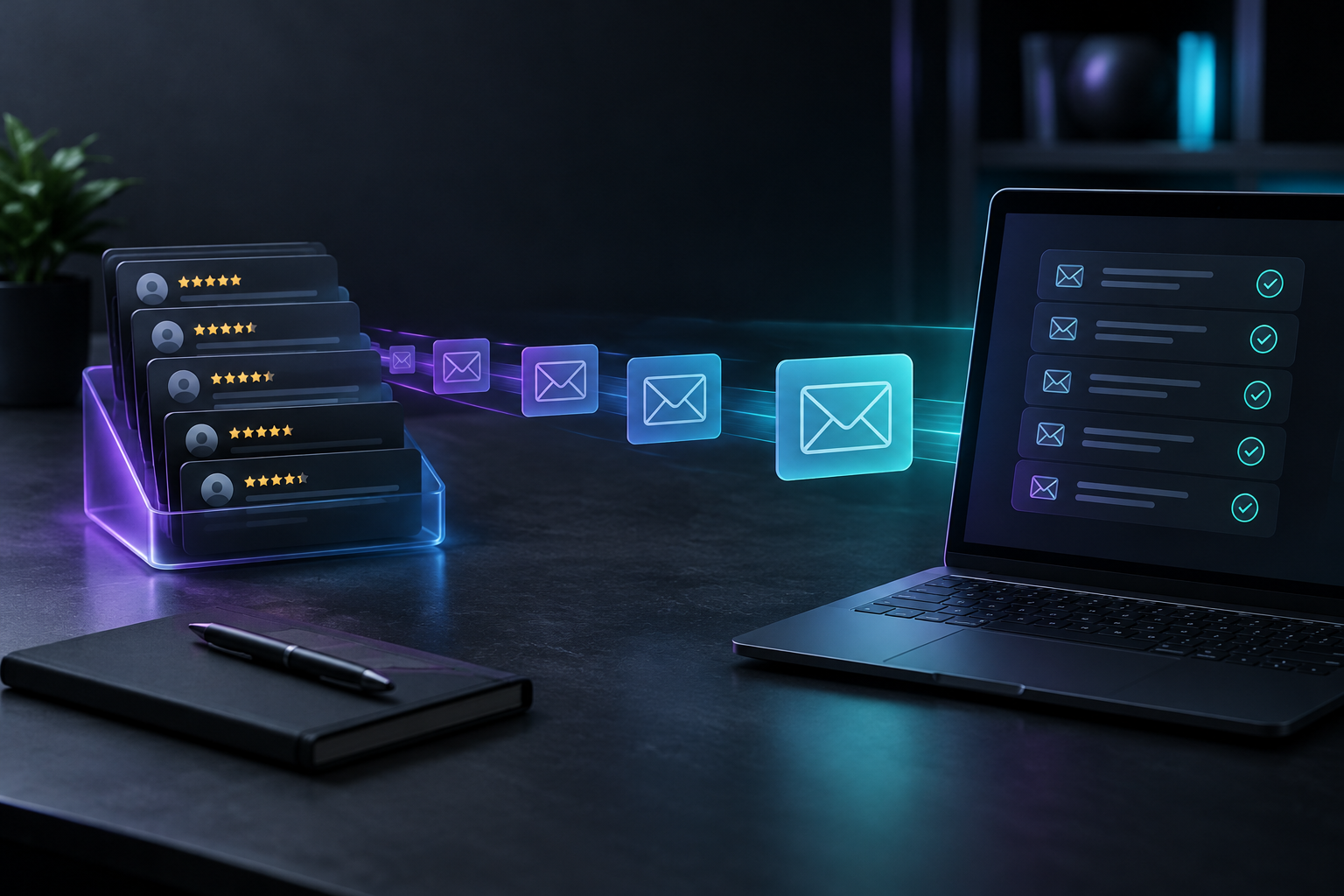
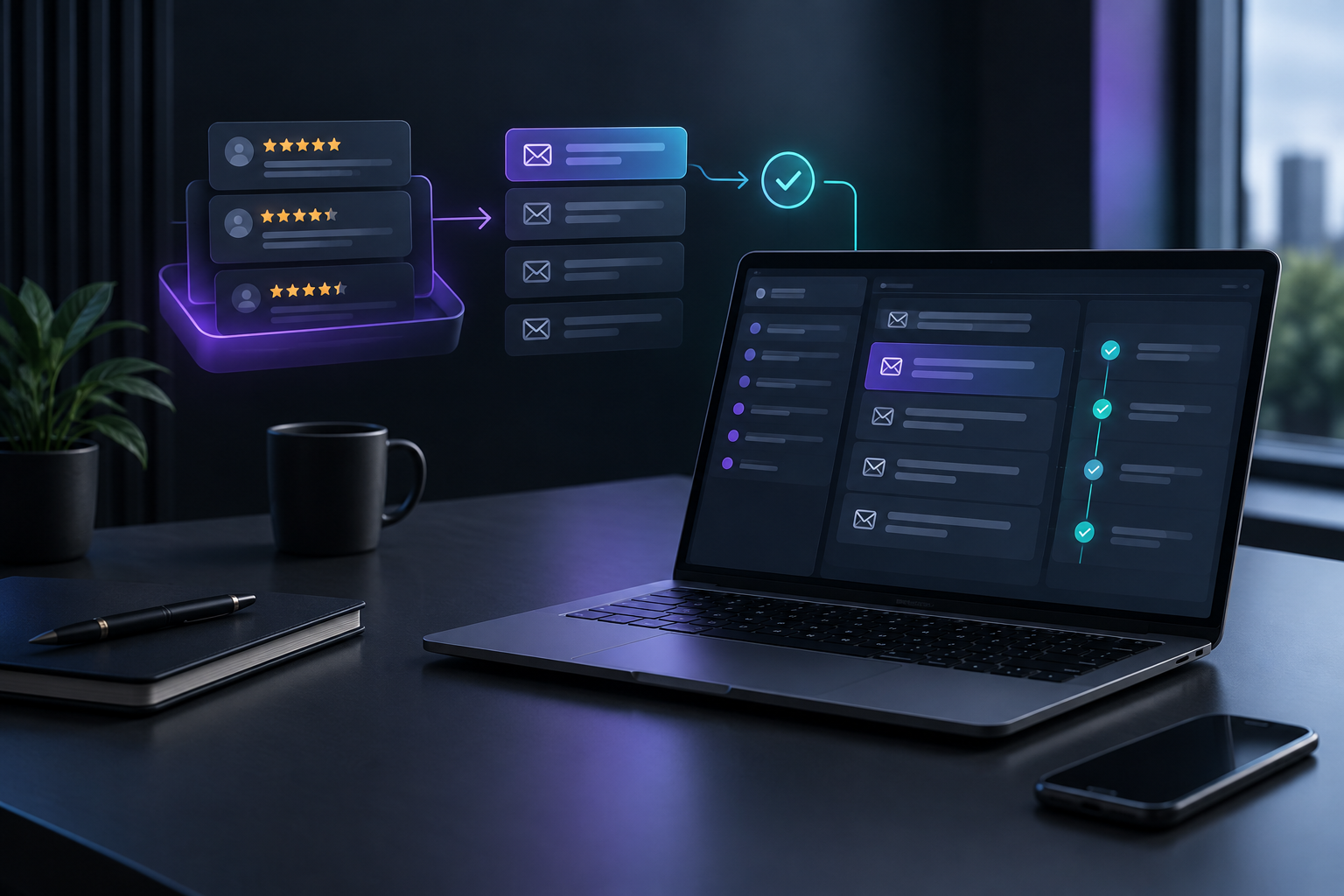
AI agents eliminate the response gap entirely. They engage inbound leads instantly through chat, email, or voice. They ask qualifying questions based on your ideal customer profile (ICP). They score responses in real time. And they route qualified leads directly to the appropriate sales rep with full context, including company data, engagement history, and qualification notes.
Autonomous Research and Enrichment
Before an AI agent qualifies a lead, it enriches the record automatically. This includes firmographic data (company size, industry, revenue, tech stack), behavioral signals (pages visited, content consumed, email engagement), and intent data (third-party signals indicating active buying research). This enrichment happens in seconds, not the 15 to 30 minutes a human SDR would spend manually researching a single prospect.
Dynamic Lead Scoring That Updates in Real Time
Traditional lead scoring models are static. They assign point values to actions and attributes, then decay over time. AI-powered lead scoring is fundamentally different. Scores update in real time as new activity occurs: site visits, email replies, ad clicks, webinar registrations, and content downloads all adjust the score instantly. A hot lead surfaces in your rep's queue immediately, not in tomorrow's morning report.
Forrester reports that 88% of B2B organizations are either actively adopting or planning to adopt AI-powered tools across their go-to-market functions. Lead scoring is consistently among the first use cases because the ROI is immediate and measurable.
Omnichannel Outreach Orchestration
AI agents do not operate in a single channel. They coordinate email, LinkedIn, phone, and SMS as one unified sequence, adjusting cadence and channel mix based on prospect engagement patterns. If a prospect opens an email but does not reply, the agent might follow up on LinkedIn. If a prospect clicks a pricing page, the agent can trigger a phone call from a human rep. This orchestration produces higher contact rates and eliminates the missed follow-ups that plague manual SDR workflows.
The Operational Workflow: From Lead Capture to Qualified Meeting
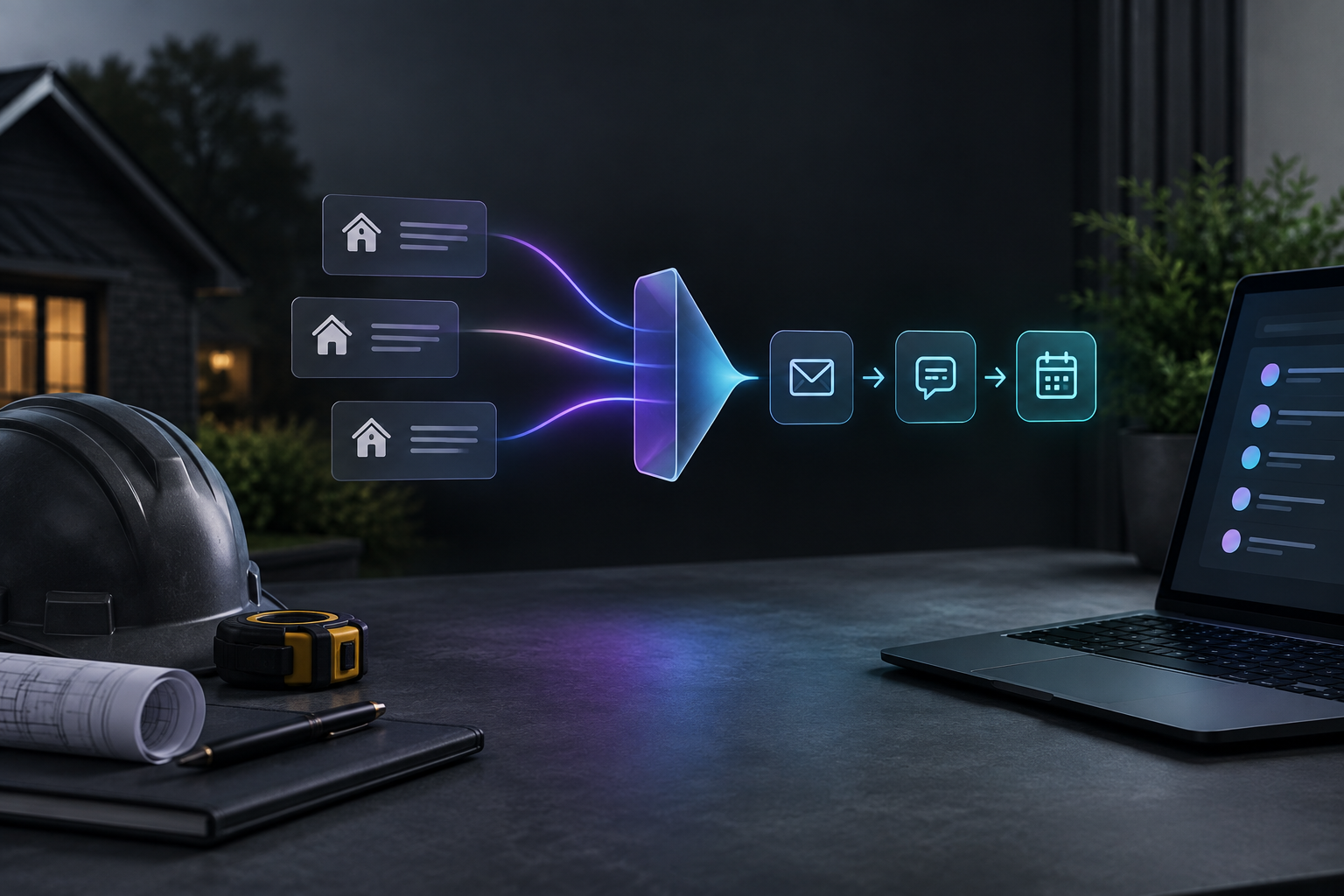
Understanding the technology is useful, but understanding the workflow is what separates companies that get results from those that just buy tools. Here is the specific operational workflow that high-performing B2B teams are using with AI agents for lead qualification.
- Capture and enrichAny channel in; firmographic, technographic and behavioral data added
- Score and segmentHigh fit gets engaged now, medium gets nurtured, low is deprioritized
- Qualify through conversationDiscovery questions on BANT, MEDDIC or your own model
- Route and briefThe right rep gets a pre-call brief with notes and talking points
- Follow up and nurtureNot ready yet? Re-qualified and re-routed when the score changes
Step 1: Capture and Enrich
A lead enters the system through any channel: form fill, chatbot interaction, inbound call, event registration, or content marketing engagement. The AI agent immediately enriches the record with firmographic, technographic, and behavioral data. No human intervention is required.
Step 2: Score and Segment
The agent applies your ICP criteria and scoring model to determine fit and intent. High-fit, high-intent leads are flagged for immediate engagement. Medium-fit leads enter a nurture sequence. Low-fit leads are deprioritized or disqualified automatically.
Step 3: Qualify Through Conversation
For high-priority leads, the AI agent initiates a qualifying conversation. This can happen through email, chat, voice, or a combination. The agent asks discovery questions aligned with your qualification framework (BANT, MEDDIC, or a custom model). It captures and logs responses, identifies objections, and determines whether the lead meets your threshold for a sales-qualified opportunity.
Step 4: Route and Brief
Qualified leads are routed to the appropriate account executive or sales rep based on territory, segment, deal size, or product interest. The agent delivers a pre-call brief that includes everything the rep needs: company overview, qualification notes, engagement history, and recommended talking points. The rep walks into the conversation fully prepared.
Step 5: Follow Up and Nurture
Leads that are not yet ready to buy do not disappear. The AI agent continues to nurture them with relevant content, periodic check-ins, and re-engagement sequences. When a lead's score changes (they revisit your pricing page, for example), the agent re-qualifies and re-routes automatically.
ROI Metrics That Justify the Investment
The business case for AI agents in lead qualification is built on four measurable outcomes.
The figures the post reports. The fourth outcome: pipeline that scales without scaling headcount.
Reduced Cost Per Qualified Lead
AI agents handle the volume work that previously required multiple SDR headcount. When you factor in salary, benefits, training, ramp time, tools, and turnover costs, the economics shift dramatically. Most B2B companies see a 40% to 60% reduction in cost per qualified lead within the first six months of deployment.
Faster Speed-to-Lead
Response times drop from hours (or days) to seconds. This single metric drives measurable lifts in meeting booking rates and pipeline conversion. Companies using AI agents for inbound qualification consistently report 2x to 3x improvements in speed-to-lead.
Higher Conversion Rates
When reps only engage with pre-qualified, pre-briefed leads, their conversion rates improve significantly. Teams report 30% to 40% lifts in open and reply rates on outbound sequences managed by AI agents, and similar improvements in meeting-to-opportunity conversion on the inbound side.
Scalability Without Proportional Headcount Growth
This is the metric that resonates most with CFOs and COOs. AI agents allow you to scale pipeline generation without linearly scaling headcount. Your digital marketing investment generates more qualified pipeline per dollar spent, and your sales team focuses exclusively on the conversations most likely to close.
AI agents are not making SDRs slightly more efficient. They are fundamentally redefining which tasks require human judgment and which can be executed autonomously at scale.
Why Custom Infrastructure Matters More Than Point Solutions
The market is flooded with AI lead generation tools. Platforms like 6sense, Cognism, Apollo, and others offer powerful capabilities. But here is what most vendors will not tell you: the value of AI agents for lead qualification is not in the tool itself. It is in how the tool is configured, integrated, and operationalized within your specific go-to-market workflow.
According to the National Institute of Standards and Technology (NIST), effective AI deployment requires careful consideration of data quality, system integration, and ongoing performance monitoring. Off-the-shelf solutions rarely account for the nuances of your ICP, your sales process, your CRM architecture, or your marketing strategy and qualification criteria.
This is where custom software and applied AI become essential. Building AI agent workflows on your own infrastructure means you control the data, the logic, the integrations, and the iteration cycle. You are not locked into a vendor's assumptions about how your sales process should work. You are building a system that reflects how your business actually operates.
What Custom AI Agent Infrastructure Looks Like
- Custom scoring models trained on your historical win/loss data, not generic industry benchmarks
- CRM-native integrations that sync with your existing Salesforce, HubSpot, or custom database without middleware fragility
- Qualification logic that mirrors your actual sales methodology, including edge cases and exceptions that off-the-shelf tools cannot handle
- Feedback loops that continuously improve agent performance based on real outcomes (closed-won, closed-lost, disqualified reasons)
- Compliance and data governance controls appropriate for your industry and customer base
Building Your AI Lead Qualification Strategy: Where to Start
If you are considering AI agents for lead qualification, here is a practical starting framework.
Audit Your Current SDR Workflow
Map every task your SDRs perform in a typical week. Categorize each as "automatable," "augmentable," or "human-required." Most teams discover that 60% to 70% of SDR activities fall into the first two categories.
Define Your Qualification Criteria Precisely
AI agents are only as effective as the qualification logic they execute. If your ICP is vague or your qualification framework is inconsistent, the agent will reflect that inconsistency. Invest time in defining clear, measurable qualification criteria before deploying any AI solution.
Start With One Workflow, Not the Entire Funnel
The most successful implementations begin with a single, high-impact workflow. Inbound lead qualification is often the best starting point because speed-to-lead improvements produce immediate, measurable results. Once that workflow is proven, expand to outbound prospecting, re-engagement, and cross-sell/upsell qualification.
Measure What Matters
Track speed-to-lead, cost per qualified lead, meeting booking rate, opportunity conversion rate, and pipeline velocity. These metrics tell you whether your AI agent deployment is actually driving business outcomes, not just activity.
Start with one workflow, then expand
- Inbound lead qualificationSpeed-to-lead gains show up immediately
- Outbound prospecting
- Re-engagement
- Cross-sell and upsell qualification
The Shift Is Structural, Not Incremental
What is happening in B2B digital marketing and sales development is not a minor optimization. It is a structural shift in how pipeline is generated and qualified. AI agents are not making SDRs slightly more efficient. They are fundamentally redefining which tasks require human judgment and which can be executed autonomously at scale.
The companies that build this infrastructure now will compound their advantage over the next several years. Those that wait will find themselves competing against organizations that qualify leads faster, respond instantly, and convert at higher rates, all with leaner teams and lower costs.
At TruLata, we build the custom software and applied AI infrastructure that makes this shift possible. Our work spans marketing strategy, content marketing, and AI-powered automation for B2B growth, including the lead qualification workflows described in this article. If your current SDR model is hitting a ceiling, or if you are ready to build AI agent capabilities into your go-to-market engine, start a conversation with our team.