

Outbound Prospecting for Contractors: Reaching Customers Before They Post on Google
Outbound prospecting is the practice of proactively contacting homeowners who are likely to need your service, instead of waiting for them to search. For contractors, that means calling, texting, emailing or mailing past customer neighborhoods, recent home buyers and expiring warranty lists. Done well, you reach the decision maker before the job ever becomes a Google search.
What is outbound prospecting, and why does it matter for contractors?
ZoomInfo defines outbound prospecting as the process where teams proactively identify, target, and engage potential buyers instead of waiting for inbound interest. The important word is control. Inbound demand arrives on the homeowner's schedule, during storms, heat waves and burst pipes. Outbound demand arrives on yours.
Most contractors run entirely on inbound: ads, maps, referrals, a form on the website. That works until the phone goes quiet in a shoulder month, and then there is nothing to pull on. Outbound gives you a lever you can pull in February.
TruLata builds leads, prospecting and follow-up systems for local service businesses across the United States, with a human gate on every single send, meaning no message leaves your business without a person approving it first. That distinction matters more in home services than in software, because you are contacting neighbors, and the wrong message lands on the street where you work.
Inbound catches demand. Outbound creates timing.
A homeowner rarely wakes up and decides to replace a roof. They notice a stain, ignore it for six weeks, mention it to a spouse, then search. Outbound prospecting inserts you into the ignoring phase. You are not competing with four other search results at that moment, because there is no search yet.
Who should contractors actually prospect?
Volume-first outbound is what gives the channel a bad name. Navattic notes that traditional outbound encouraged a quantity over quality approach, and homeowners have less patience for that than purchasing managers do. Contractor outbound sales works when the list is tight and the reason for contact is obvious.
1. Neighbors of jobs you just completed
This is the highest-yield list in contractor outbound, and almost nobody works it. Houses on the same street were built in the same decade with the same roofs, the same water heaters and the same panel capacity. If you just replaced a 22 year old system four doors down, the rest of the block is on a similar clock.
Work a radius around every completed job: the 20 to 40 nearest addresses, contacted within two weeks of the truck leaving. Reference the visible work. "We replaced the roof at 412 Linden last week" is specific, checkable and instantly credible.
2. Recent home sales
New owners spend heavily in the first 12 months and have no established relationship with any contractor in your market. Public records and MLS sold data give you addresses, close dates and often the home's age. A note at 30 days ("here is what your home's plumbing likely needs at this age") arrives before the first emergency.
3. Past customers approaching a service interval
Maintenance agreements lapse. Water heaters age out around 10 to 12 years. Filters, anodes, flush schedules and warranty expirations are all calendar events sitting in your own job history. This is proactive lead generation from data you already own, which is why lead tracking counted from your own forms matters: your history is the prospecting list.
4. Quotes that never closed
An unsold estimate from 14 months ago is a warm outbound contact, not a dead file. The need did not disappear, the budget did. Reopening those is closer to follow-up than cold calling, and it is the cheapest pipeline in your business. We covered the mechanics in why your best leads go cold and how to fix it.
Which channels work for direct outreach to homeowners?
memoryBlue recommends a multi-channel outbound prospecting strategy combining personalized emails, follow-up calls and social touches. Translate that to residential services:
- Text: highest read rate, lowest tolerance for anything generic. Reserve it for past customers and people who have given you a number. Always identify the business in the first six words.
- Phone: still the fastest route to a booked appointment for larger tickets. Best used on past customers and unsold quotes, not cold lists.
- Email: the right channel for seasonal and educational sequences, and the easiest to personalize at scale by neighborhood and home age.
- Direct mail: underrated for radius work around a completed job, and effective for post-project thank-you notes that keep the relationship warm, as noted in a contractor's guide to direct mail lead generation.
- Door hangers: the physical version of radius prospecting, and the cheapest way to make a completed job visible to the block.
Sequence, do not blast
Crunchbase advises establishing a regular cadence, close enough that prospects remember you but spaced so they do not feel smothered. For homeowners, a workable rhythm is a mail piece or door hanger first, an email at day 5, a call at day 12, and then nothing for a season. Three touches, then rest. Anything heavier reads as pressure in a residential market.
What do you actually say?
Personalization is the whole game. The research is consistent on this: Salesforce's guidance on outbound sales stresses that you should personalize your outreach to each prospect and communicate a clear value proposition rather than a generic pitch. In contracting, personalization is easy because the data is physical.
The four elements of a message that gets answered
- Proximity: name the street, subdivision or neighborhood. "We were on Maple Ridge Tuesday."
- Specific observation: home age, roof age, common system in that build, or a recent storm date.
- A small ask: a free inspection, a photo review, a 10 minute call. Not "get a quote."
- An easy out: one line giving them a clean way to decline. Response rates go up, complaints go down.
What to cut
Cut "family owned since," cut "we pride ourselves," cut anything that could be sent by any contractor in the county. If the message would still make sense with a competitor's name on it, it is not prospecting, it is advertising with a stamp.
How do you keep outbound from damaging your reputation?
This is where most contractor outbound programs fail, and it is why automation alone is dangerous. An automated sequence that texts a grieving homeowner, contacts someone on a do-not-call list, or sends a roof pitch to a customer who just filed a complaint does measurable harm in a market where everyone talks.
Three controls keep you safe:
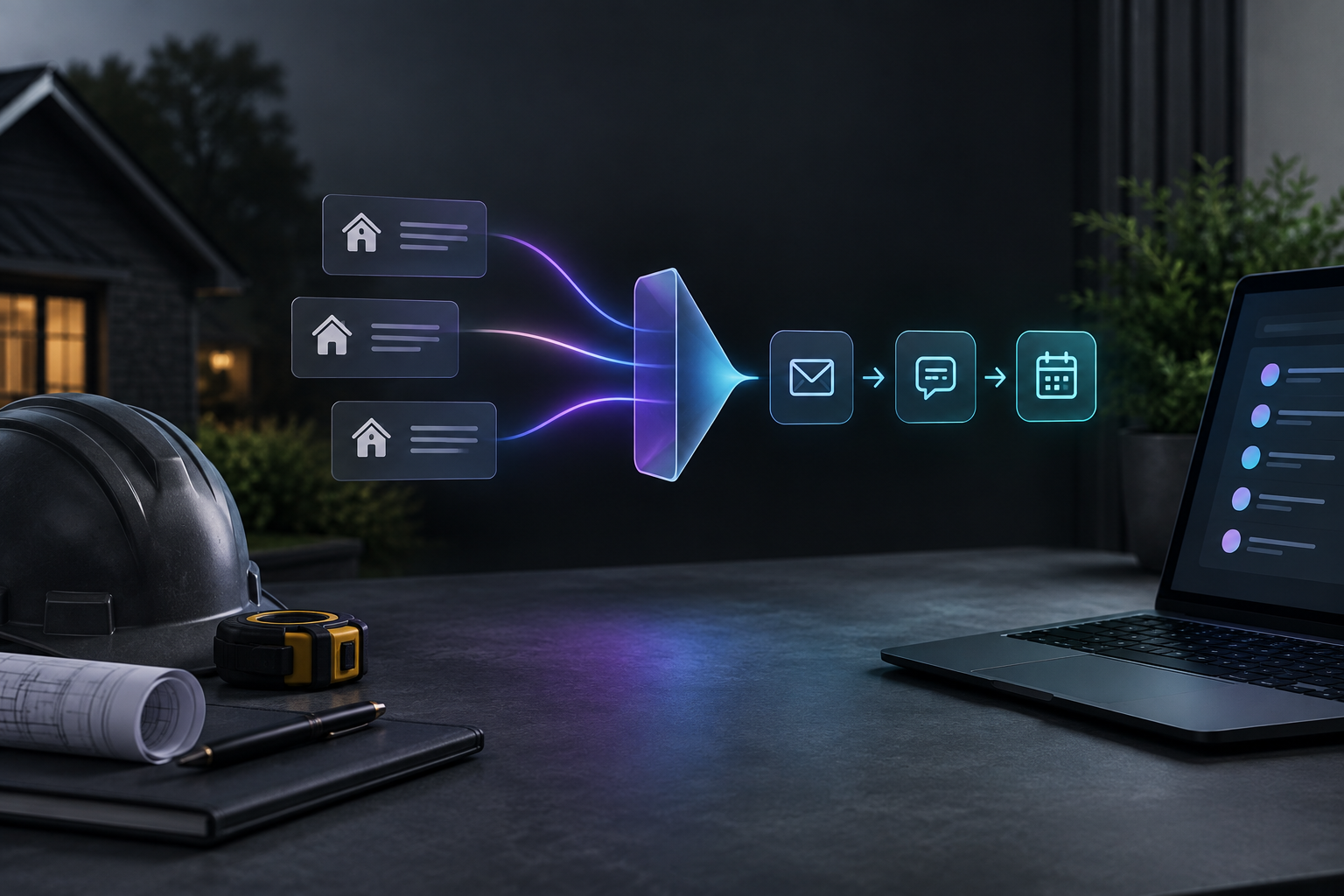
- A human gate. Someone reviews the list and the message before it sends. That is the model behind outbound prospecting with a human gate: the system drafts and stages, a person approves.
- Clean data. ZoomInfo's guidance is blunt: clean your data before launching and keep it clean so replies do not stall. Duplicate addresses and dead numbers are the fastest way to look unprofessional.
- Territory discipline. Never prospect outside the area you will actually drive to. Booking a job 50 minutes out of range costs more than it earns, which is the argument in automate territory management and stop chasing outside your range.
Compliance basics
Respect do-not-call registration, honor opt-outs immediately and on every channel, identify your business clearly in every message, and keep a record of consent for texts. Treat these as operating requirements, not legal footnotes.
How do you measure whether outbound is working?
Outbound looks expensive for the first 60 days and cheap after 180, because the touches compound. Measure it on a longer window than paid search, and measure these:
- Contacts per list segment: how many households you actually reached, not how many you queued.
- Response rate by segment: job-radius vs new homeowner vs unsold quote. These will differ sharply, and the winner is usually job-radius.
- Appointments booked per 100 contacts.
- Cost per booked job by channel, compared against your paid channels.
- Attribution for delayed response: a homeowner who gets your mailer in March and calls in August is an outbound win, even if they Googled you first. Ask how they heard about you and record it.
ZoomInfo's advice applies directly: treat it like a program, review sequence performance weekly rather than quarterly, and tear down messaging that is not converting. That only works if the numbers sit in one place, which is the point of the Command Center dashboard rather than three spreadsheets and a whiteboard.
A 30 day starting plan
Week 1: build the lists
Pull your last 90 days of completed jobs and map a 30 house radius around each. Pull recent home sales in your service area. Pull unsold quotes from the last 18 months. Deduplicate and remove anyone who opted out.
Week 2: write three messages
One per segment. Keep each under 90 words. Have the person who answers your phone read them aloud. If they wince, rewrite.
Week 3: send small
Start with 100 contacts, not 2,000. You are testing whether the message earns replies and whether your team can handle the calls that come back.
Week 4: measure and scale the winner
Kill the two weaker segments for now. Double the one that worked. Then add the second channel to that same segment.
Start prospecting before the search happens
The contractors who grow in slow seasons are not the ones with bigger ad budgets. They are the ones with a list, a cadence and someone accountable for working it. If you want outbound sequences built from your own job history, staged and reviewed by a person before anything sends, the live demo shows exactly how the lists, messages and approvals work together. Bring your last 90 days of completed jobs and we will show you the prospecting list hiding inside them.