


Pool marketing works best when you build search visibility and reviews before the warm months, run ads and email on a schedule that follows the weather, and count every lead by its source so you know which channel booked the job. You can do this yourself, hire an agency, or use a platform such as TruLata.
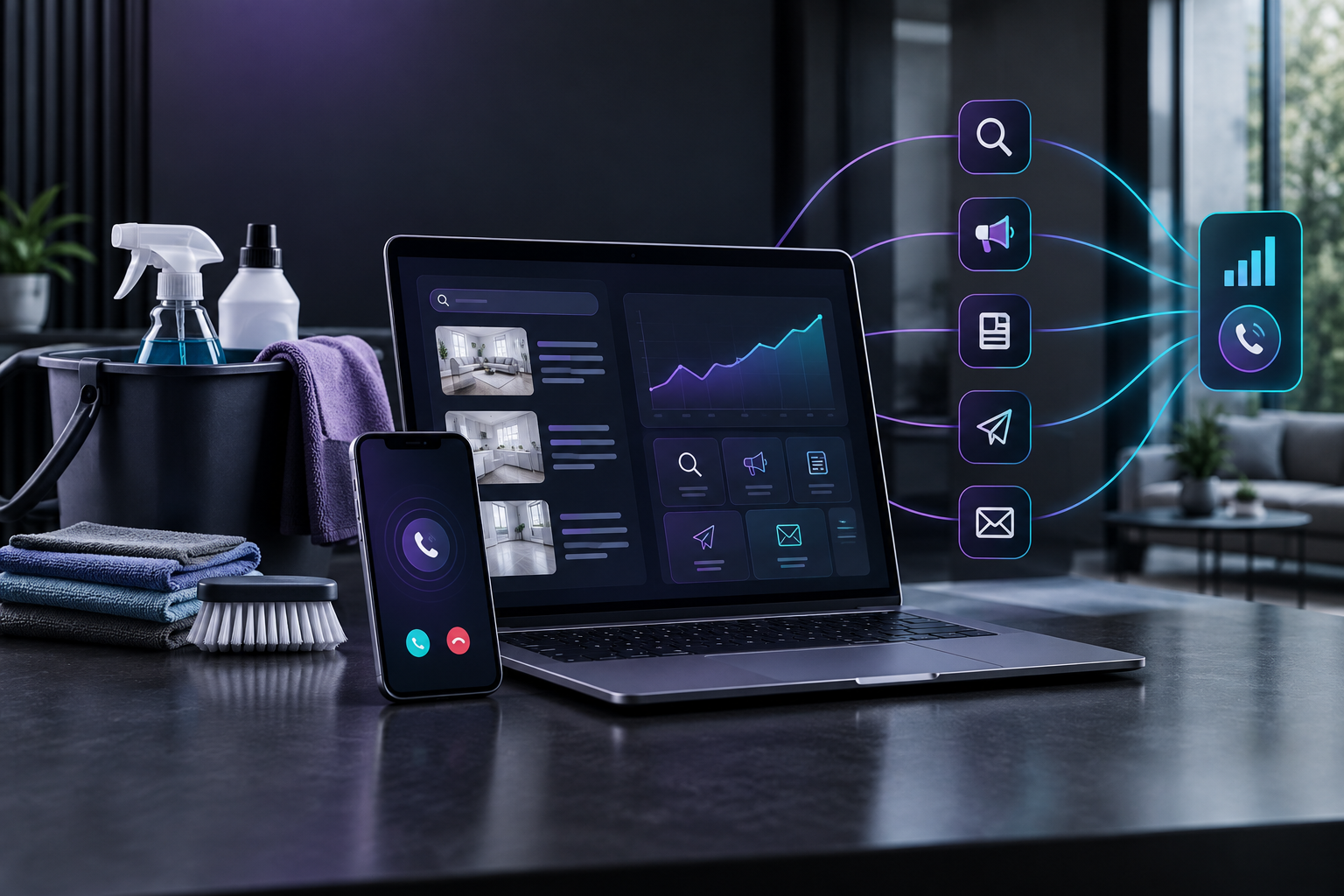
TruLata is an AI marketing platform for local service businesses, including pool builders, pool service companies and pool repair shops. It runs search, Google and Meta ads, content, outbound and email. It also shows every lead and the channel it came from. The rest of this page covers how pool demand moves through the year, what your real options are, and how to pick the one that fits how you work.
What makes marketing different for local service businesses?
Pool demand swings with the weather even more than most home service trades. Homeowners decide fast when they are ready, and the busy season leaves no time to fix marketing that should have been fixed in winter. A few facts set the shape of the year:
Seasonal pressures and what they demand
- Weather sets search demandKnow your market's seasons, which may be two or four
- Rankings take time to buildPublish seasonal pages before the peak
- Home sales bring new pool workExpect buyers to inspect, repair and service pools
- Busy season tests follow-upSettle response, quotes and scheduling early
- Slow monthsFix profile, ask for reviews, set up tracking
- Weather sets search demand. Local services follow weather patterns more than holidays. Search Engine Land notes that these patterns can span four seasons in a northern market and only two in a warm southern one. Pool searches follow the same logic: openings, heater repair and new builds peak at different times depending on where you work.
- Seasonal pages need to be ready before the peak. The same Search Engine Land guide gives the example of a landscaping company that refreshes its spring pages during the slowest months so they rank when homeowners start searching. Pool opening and new-build pages work the same way. Rankings take time to build, so a page published in May is late.
- Home sales are seasonal, and new homeowners create pool work. The National Association of Realtors reports that market activity rises in spring and summer, and that the West swings less than other regions. When homes change hands, buyers inspect, repair and service the pools that come with them.
- The busy season tests your follow-up. A Forbes Business Council piece argues that a business needs its own busy-period playbook before the rush arrives. For a pool company, that means having response times, quote follow-up and scheduling settled before the phone starts ringing.
Do the planning in the slow months and collect the results in the busy ones. Use winter to fix your Google Business Profile, ask past customers for reviews, refresh service pages and set up tracking. Turn spend up as local search demand rises, and turn it down when it falls, rather than leaving one budget running all year.
What pool marketing channels actually bring in customers?
Most pool companies get their work from a short list of channels. Each channel has its own job, so pick a few and run them deliberately.
Channels and their jobs
Local search and reviews
- Keep Google Business Profile current
- One page per core service
- Ask after visible jobs, reply to all
Google and Meta ads
- Search ads catch people needing service now
- Meta reaches homeowners before they search
- Start ahead of the season
Email to customers
- Opening reminders in late winter
- Closing reminders in late summer
- Upgrade offers in slow months
Answer engines
- Clear service pages
- Consistent business details
- Real reviews
Local search and your Google Business Profile
When a homeowner types "pool service near me" or "pool heater repair," the map results and organic listings decide who gets the call. Keep your categories, service area, hours and photos current. Write a separate page for each core service: weekly cleaning, openings and closings, equipment repair, resurfacing and new construction. Each page should answer the questions a homeowner asks before booking.
Reviews
Homeowners read your reviews in search results before they call. Ask every satisfied customer, especially after visible jobs like an opening or a repair that fixed a green pool. Reply to every review, good or bad, in plain language.
Google and Meta ads
Search ads catch people who already need a pool service today. Meta ads reach homeowners before they search, which suits new builds, renovations and spring opening reminders. Both work best when you start them ahead of the season and match the message to the month.
Email to past and current customers
Send opening reminders in late winter, closing reminders in late summer, and equipment upgrade offers in the slow months. Customers who hear from you on a schedule are more likely to stay with you.
Answer engines
More homeowners now ask ChatGPT, Gemini, Claude or Grok which pool company to call. Clear service pages, consistent business details and real reviews make you easier for those tools to name. TruLata offers AI visibility tracking across four answer engines so you can see whether you are being mentioned.
What are my options for pool marketing?
Pool owners usually weigh a handful of options: field service software with marketing add-ons, CRMs and all-in-one platforms, specialist agencies, doing it yourself, or a platform that runs the marketing for you. The table below summarizes them, and the short sections after it explain each one.
Options and their honest limits
- JobberBuilt around running jobs, not marketing channels
- Housecall ProMarketing sits beside operations
- ServiceTitanHeavier setup than a small pool route needs
- HubSpotGeneral-purpose, so someone must build it out
- GoHighLevelYou or a hired party still run the tools
- ScorpionYou depend on the provider's reporting
- ThryvBroad coverage, not built for a single trade
These are categories as much as products. Many owners combine two of them, such as field service software for scheduling and a separate tool or agency for marketing.
| Option | What it is | Best for | One honest limit |
|---|---|---|---|
| Jobber | Field service management software | Scheduling, quoting and invoicing for service crews | Built around running jobs, not running your marketing channels |
| Housecall Pro | Field service management software | Small to mid-size home service teams managing daily work | Marketing features sit beside operations rather than at the center |
| ServiceTitan | Field service management software for larger trades businesses | Multi-truck operations with dispatch and office staff | Heavier setup than a small pool route usually needs |
| HubSpot | CRM and marketing software suite | Teams that want a CRM and will configure it themselves | General-purpose, so someone has to build it around a local service business |
| GoHighLevel | All-in-one marketing and CRM platform | Owners or agencies comfortable building their own funnels | The tools are there, but you or a hired party still run them |
| Scorpion | Marketing company serving local service businesses | Owners who want an outside team handling their marketing | You depend on the provider's reporting to see what is working |
| Thryv | Small business software suite | Owners who want several business tools in one account | Broad coverage across many small business types, not built for a single trade |
| Podium | Customer messaging and reviews software | Businesses focused on texting customers and collecting reviews | Covers part of marketing, not ads, search content and outbound together |
| A marketing agency | Outside team that runs channels for you | Owners who want to hand off the work entirely | Results vary by agency, and reporting is often on their terms |
| Doing it yourself | You run your profile, ads, reviews and email | Owner-operators with time in the slow season | Time disappears in the busy season, exactly when marketing matters most |
| TruLata | AI marketing platform that runs search, ads, content, outbound and email | Service businesses that want the work done and every lead counted by source | It runs marketing, not scheduling, dispatch or invoicing |
Jobber
Jobber is field service management software: scheduling, quotes, invoices and crew management. It fits pool service companies that need to organize recurring routes. Its limit for marketing is that it is built to run jobs, so ads, search content and outbound still need another home.
Housecall Pro
Housecall Pro sits in the same field service category and fits small and mid-size home service teams. It is strong for daily operations. Marketing is a side feature rather than the core of the product.
ServiceTitan
ServiceTitan is field service software aimed at larger trades businesses with office staff and dispatch. It fits a pool builder or service company running many trucks. For a small route operation, the setup is usually more than the business needs.
HubSpot
HubSpot is a CRM and marketing software suite used across many industries. It fits teams willing to configure pipelines and campaigns themselves. Because it is general-purpose, someone has to shape it around a pool company's seasons and services.
GoHighLevel
GoHighLevel is an all-in-one marketing and CRM platform. It fits owners or agencies who like building their own funnels and automations. The tools exist, but the work of running them still falls on you or whoever you hire.
Scorpion
Scorpion is a marketing company that serves local service businesses and publishes research on home services marketing. It fits owners who want an outside team to handle the work. As with any provider, you see results through the reports they give you.
Thryv and Podium
Thryv is a small business software suite, and Podium is customer messaging and reviews software. Both cover useful parts of the job, such as customer communication and reviews. Neither replaces a full plan that also covers ads, search content and outbound.
A marketing agency
An agency runs your channels for you, which suits owners who want to hand off the whole thing. Quality varies widely from one agency to the next. Ask how they will show you leads by source before you sign. Our guide to marketing software that replaces a marketing agency covers that tradeoff in more detail.
Doing it yourself
Plenty of pool owners run their own Google Business Profile, ask for reviews and boost a few posts. It costs time rather than fees, and it can work well in the off-season. The problem is that the busy months, when demand is highest, are also the months you have the least time.
TruLata
TruLata runs search, Google and Meta ads, content, outbound and email on a schedule. It counts every lead from your own website with its source, and it shows what happened and what it cost on one dashboard. It is built by a team that ran a marketing agency and turned that work into software. You can see how TruLata works step by step. Leads are captured through lead tracking counted from your own forms, so the numbers come from your site rather than an ad platform's estimate. For builders chasing commercial or property-management work, prospect emails go out through outbound prospecting from a review-first queue, and every send is logged. Its limit is that it is a marketing platform, so you will still use your own tools for scheduling and invoicing.
Which one should I choose if...?
Choose based on how you run your business and how much time you have in July, more than on feature lists. Match yourself to the closest description below.
If your need is...
- Routing crews and billing
- Configuring a CRM yourself
- Reviews and texting
- Handing off marketing entirely
- Solo with a quiet winter
- Everything on one screen
Consider...
- Jobber, Housecall Pro or ServiceTitan
- HubSpot or GoHighLevel
- Podium
- An agency or Scorpion
- Doing it yourself
- TruLata
- If your biggest headache is routing crews and billing recurring customers: start with field service software like Jobber, Housecall Pro or, for larger operations, ServiceTitan.
- If you want a CRM and enjoy configuring it: HubSpot or GoHighLevel give you the building blocks.
- If reviews and customer texting are your main gap: a messaging and reviews tool like Podium covers that piece.
- If you want to hand off marketing to people entirely: a specialist agency or a company like Scorpion fits, as long as you insist on seeing leads by source.
- If you are a solo operator with a quiet winter: doing it yourself is a reasonable start. Fix your profile, reviews and service pages in the off-season.
- If you want search, ads, content, outbound and email running on a schedule, with every lead and its cost on one screen: TruLata fits that need.
Whatever you pick, judge it by one test: at the end of the month, can you see how many leads came in, where each one came from and what it cost? If not, you cannot tell which spend is working, and that costs more when the season is short.
How should a pool company plan its marketing for 2026?
Work backward from your busiest month. Most of the important work happens months before it.
Work backward from your peak
- PrepareRefresh pages, collect reviews, clean email list, set up tracking
- LaunchOpening emails, search ads, Meta ads for new builds
- RespondAnswer fast, follow up on quotes, shift budget
- Wrap upClosing services, reviews, off-season upgrades
- Slow season: refresh service pages, collect reviews from last season's customers, clean up your customer email list and set up lead tracking.
- Six to eight weeks before the peak: launch opening reminders by email, start search ads for openings and repairs, and run Meta ads for new builds and renovations.
- Peak season: answer fast, follow up on every quote, and watch which channels are booking jobs so you can move budget toward them.
- Late season: push closing services, ask for reviews while jobs are fresh, and promote off-season equipment upgrades.
This schedule only works if it runs every week, including the weeks when you are on a job site from dawn to dusk. That is the gap a scheduled system, whether a person or a platform, is meant to fill.
Ready to see your pool marketing in one place?
If you want your search, ads, content, outbound and email running on a schedule, with every lead counted from your own site and tied to its source, TruLata was built for that. You see what happened and what it cost on your TruLata dashboard, without stitching together reports from five tools.
- Run on a scheduleSearch, ads, content, outbound and email
- Count every leadTied to its source from your own site
- See cost on the dashboardNo stitching reports from five tools
- Book a walkthroughSet up your plan before the season
Book a walkthrough at the live demo to set up your plan before the season starts.