™

A zero click search happens when a homeowner gets their answer without visiting any website. For plumbers, AI answer engines now handle questions like "why is my water heater leaking" and "who is a good plumber near me" inside the answer itself. You win the lead back by becoming the business those answers name.
Picture a homeowner at 11 p.m. with water spreading across the basement floor. They ask ChatGPT what to do. The answer tells them to shut off the main valve, explains the likely cause, and names three local plumbers. If you are not one of the three, you never had a chance at that job. Your analytics will not show the loss either, because nobody clicked anything.
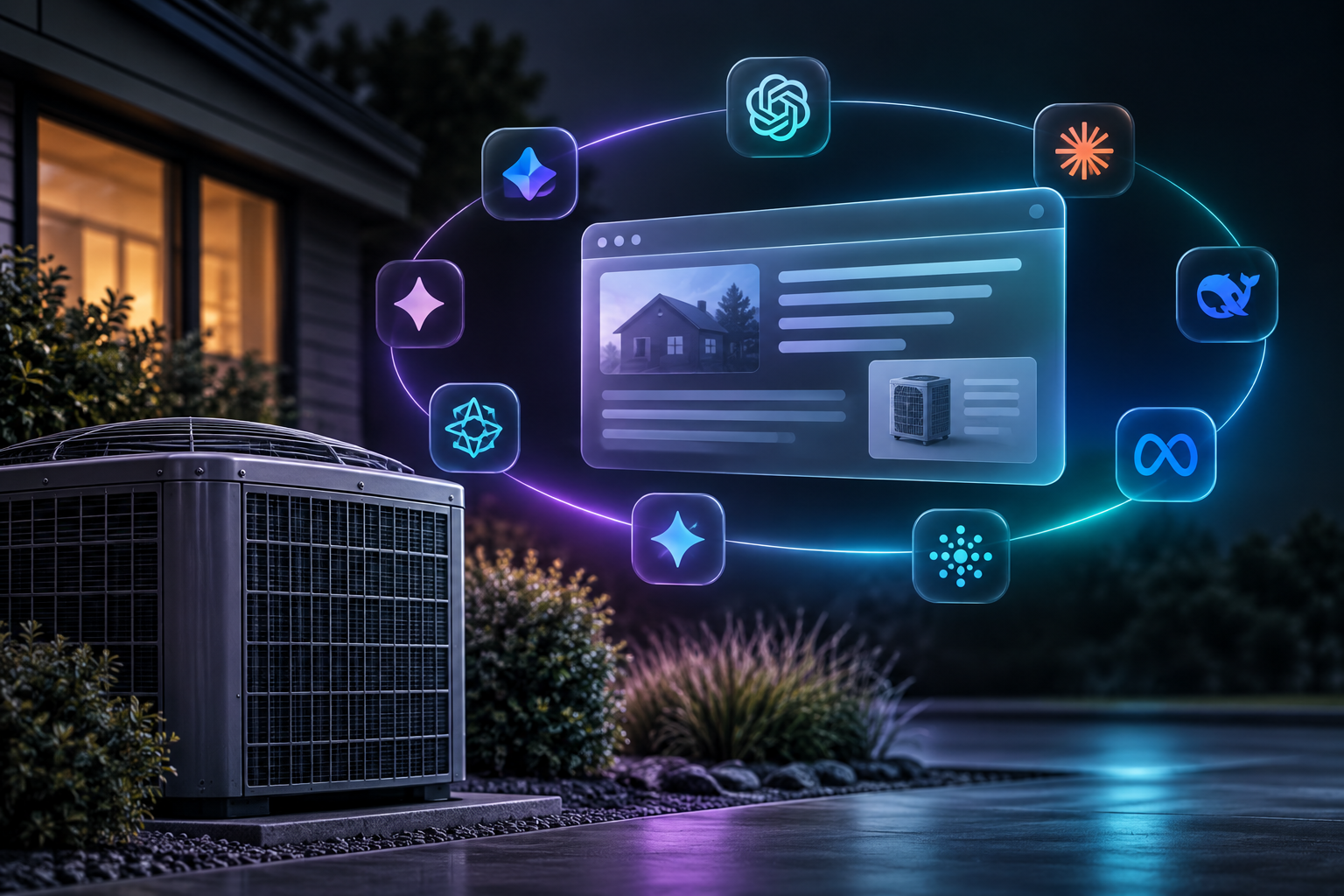
TruLata is an AI marketing platform for local service businesses, plumbers included. It measures whether a business is named by ChatGPT, Gemini, Claude, Grok, Manus, Google AI Overviews, Perplexity, Meta AI and DeepSeek, and it runs search, ads, content, outbound and email on one screen. This guide explains how these engines choose which plumbers to name and what you can change this month to be one of them.
What is a zero click search, and why does it hit plumbers so hard?
A zero click search is any search that ends without a visit to a website. The searcher reads a summary, a map card or an AI generated answer, and then they either act on it or move on. For years, plumbing marketing followed a simple sequence: rank on page one, earn the click, convert the visit into a call. AI answers have broken that sequence at the second step.
Plumbing is especially exposed for two reasons. First, most plumbing questions are urgent and narrow. A homeowner wants to know whether a running toilet can wait until morning, not read a long article about it. Second, the questions that bring in jobs follow a predictable path: first a diagnosis, then a recommendation. AI answer engines now handle both steps in a single response.
The diagnostic question
"Why is there no hot water?" "Is a gurgling drain serious?" "What do I do if a pipe bursts?" These used to send homeowners to plumbers' blog posts and service pages. Now the engine writes the answer itself, often drawing on those same pages. The homeowner learns enough to know they need help, but never sees whose page taught them.
The recommendation question
"Who is the best emergency plumber in my area?" This is the question that turns into a booked job, and the engine answers it with names. Ranking on page one of Google does not guarantee you appear in that list. We covered the wider pattern across the trades in our piece on how contractors get found without clicks. For plumbers, the stakes are higher, because an emergency call tends to go to the first credible name the homeowner sees.
Is every zero click search a lost plumbing lead?
No, and this distinction shapes everything you do next. A homeowner who taps the call button on your Google Business Profile or a map card has made a zero click search, since they never visited your site. That is still a phone call and still a job. A zero click search with your name in it can be the best lead you get all week.
The real loss happens when the answer names someone else. So the goal shifts from earning visits to earning mentions: being named, being described accurately, and being easy to call straight from the answer. That means tracking more than website sessions. Watch your profile calls, direction requests and review activity alongside your search data. If you want those numbers in one place, see how TruLata pulls your rating, reviews and profile calls next to the queries that surface you.
How do AI answer engines decide which plumber to name?
Each engine weighs things differently, but they draw on the same three pools of evidence. Learning how each pool works tells you where to put your effort.
Pool one: map and business cards
When ChatGPT, Google AI Overviews or Gemini answer a local question, they often show business cards with a name, rating, review count and phone number. Those cards are built from listing data: your Google Business Profile, other map platforms and third-party review sites. A listing with a stale phone number, wrong hours or a thin review history can make a good plumber look like a risky choice, and the homeowner will judge you on that card before reading any of your copy.
Pool two: cited sources
The written part of the answer draws on sources the engine trusts: review sites, local directories, "best plumbers in" lists, local news, community discussion threads and plumbers' own websites. Engines do not share the same favorites. One may lean on directories, while another cites plumbers' own service pages. This is why you need to check what each engine cites for plumbing questions in your city instead of assuming they all behave like Google.
Pool three: your own website
When an engine cites a plumbing company directly, it usually pulls from pages that state plainly who you are, what you do and where you do it. Homepages, service pages, service-in-city pages and location pages do most of this work. General blog posts get cited far less often. The engine wants a page that answers "who fixes water heaters in this town," and a page titled "5 Fun Facts About Pipes" does not.
How do plumbers earn ChatGPT citations and AI mentions?
None of what follows is a trick. Each step makes your business easier for a machine to understand, check and quote. Work through them in order.
1. Make the top of your homepage read like an answer
The first two sentences of your homepage should say exactly what you do, for whom, and where. For example: "Licensed plumbers serving [your city] and [neighboring towns]. We handle emergency repairs, water heaters, drain cleaning and repiping, with same-day service when our schedule allows." An engine can lift that sentence word for word. A headline like "Your Comfort Is Our Passion" gives it nothing to quote.
2. Build one page per service, then one per service and city
Water heater repair, water heater replacement, drain cleaning, sewer line repair, leak detection, emergency plumbing: each deserves its own page with its own clear answer. Then add pages that pair your main services with the towns you actually serve. Write each one specifically. Mention the housing stock, common problems in older neighborhoods, and local permit requirements where they apply. Pages that differ only by the city name are easy for engines to skip.
3. Answer emergency questions in plain steps
Homeowners ask AI tools what to do in the first ten minutes of a plumbing emergency. Publish short, accurate answers: where the main shutoff usually sits, how to turn off a water heater safely, when a clog is a DIY job and when it signals a sewer problem. Put the answer at the top, then explain when to call a professional. Engines reward pages that solve the problem honestly, and the homeowner remembers who helped.
4. Make every listing agree with every other listing
Your business name, address, phone number, hours, service area and categories should match exactly across Google Business Profile, Bing Places, Apple Business Connect, Yelp, the Better Business Bureau and any directory that shows up for plumbing searches in your area. If engines find conflicting details, they have a reason to trust you less. Choose primary and secondary categories that match the jobs you want, and keep your listed services current.
5. Ask for reviews that describe the job
"Great service!" helps a little. "They replaced our 50 gallon water heater in Riverside the same afternoon we called" helps much more, because it gives an engine the service, the neighborhood and the speed in one quotable line. When you ask for a review, prompt the customer gently: what you fixed, where, and how quickly. Reply to every review, including the critical ones, in a calm and specific way. Those replies get read by people and by engines.
6. Earn mentions where neighbors ask for recommendations
Some answer engines cite neighborhood groups and community threads where someone asks for a plumber recommendation. You cannot control those conversations, and you should never post fake ones. You can earn real ones. Do good work, ask satisfied customers to mention you when a neighbor asks, and have the owner answer plumbing questions helpfully under their real name without pitching. Sponsoring a local event or being quoted in local news after a hard freeze also creates mentions engines can find.
7. Publish only claims you can prove
Your license number, years in business, certifications and warranty terms should appear on your site and match your listings. Engines compare sources, and a claim that shows up nowhere else is a weak signal. This is also why TruLata's website builder, using its patent-pending AI claim-verification technology, will not publish a rating, review count, year in business, credential or award without a source on file. What the owner types becomes a dated source, and claims the AI invents are refused. Accurate claims are the ones an engine can safely repeat.
How do you track the plumbing leads AI answers send you?
You cannot improve what you only check by hand once a quarter. Asking ChatGPT "best plumber near me" from your office phone tells you what one engine said once, to one user, in one place. AI answers change by engine, location and wording, so you need a repeatable method.
- Run a fixed set of questions on a schedule. Pick 10 to 20 real customer questions, both diagnostic and recommendation, and run them across every major engine. Record whether you are named, which competitors appear, and which sources are cited. TruLata handles this with tracking across nine answer engines, so you see where you appear and where you are missing in one view.
- Count leads where they arrive. Website analytics will undercount AI-driven demand, because many of those customers never click. Measure from leads counted from your own forms and calls, with the source and outcome attached to each one.
- Ask every new customer how they found you. Add "ChatGPT or another AI assistant" as an option on your intake form and in your phone script. It is low tech, and it shows you what your dashboards miss.
- Watch branded search. When AI answers mention you, more homeowners search your business name directly afterward. A rise in branded queries in Google Search Console often shows up before a rise in direct AI referrals.
What should a plumber fix first in the next 30 days?
If you only have a few hours a week, use this order. Each step builds on the one before it.
- Week one: Run your question set across the major engines and write down who gets named in your city. Then audit your Google Business Profile for accurate hours, categories, service area and phone number.
- Week two: Make your listings consistent across the main map platforms and directories, and rewrite the first two sentences of your homepage so they answer who, what and where.
- Week three: Publish or rewrite your three highest-value service pages, each opening with a direct answer. Add one emergency how-to page.
- Week four: Start asking for job-specific reviews on every completed ticket, add the "how did you hear about us" question, and run your question set again to compare.
After that, keep a monthly routine: one new service-in-city page, steady review requests, a listing check and a fresh round of AI answer tracking. Being named is not a one-time project. It is a standing job, like keeping your trucks stocked.
How does TruLata help plumbers get named in AI answers?
TruLata puts your AI visibility next to the rest of your marketing on your TruLata dashboard: search rankings and queries, reviews, Google Ads spend and cost per lead, content, and the leads your own forms recorded. Data refreshes when you open it, so you are never reading last month's report. Addy, the orchestrator inside TruLata, takes plain English requests, starts AI agents on the work, checks what they bring back and waits for your OK on anything public. Prospect emails leave from a review-first queue, and every send is logged.
Whether the owner, an office manager or a marketing lead runs things, the question is the same: when a homeowner asks an AI assistant for a plumber in your area, does your name come up? Open the live demo of TruLata to see how it tracks that answer across nine engines and connects it to the calls and jobs that follow.