™


Zero click search means a homeowner gets an answer from Google's AI Overview, ChatGPT or another answer engine without visiting a website. For roofing contractors, the answer often includes the names of companies to call. If your business is not named there, the lead may never reach your site, however well your pages rank.
Here is a pattern to look for in your own data: impressions in Google Search Console are climbing, rankings look healthy, and the phone rings less than it did a year ago. If that matches your numbers, the website may not be broken. The homeowner may simply have had no reason to visit it. They asked a question, read the answer at the top of the page, and called the company the answer pointed to.
TruLata is an AI marketing platform for service businesses that measures whether a business is named by nine answer engines: ChatGPT, Gemini, Claude, Grok, Manus, Google AI Overviews, Perplexity, Meta AI and DeepSeek. This guide explains what the shift from click-based to citation-based search means for roofing demand, and gives you a four-week plan to start on.
What is zero click search, and why does it hit roofing contractors so hard?
A zero click search is any search that ends on the results page. The searcher reads an AI summary, a featured snippet, a map pack or a chatbot reply, and the question is answered. There is no visit to your site, no form fill and no tracked session.
The behavior is measurable. Bain & Company's research on zero click search found that about 80% of consumers rely on zero click results in at least 40% of their searches, and Bain estimates the shift is reducing organic web traffic by 15% to 25%. That is a cross-industry figure, not a roofing one, so treat it as a direction rather than a forecast for your own site.
Roofing has features that make the pattern plausible for contractors:
- Homeowners research before they call. A roof is an expensive, infrequent purchase, so people ask a lot of questions first. Those are the questions AI summaries are built to answer.
- Urgency shortens the list. After a leak or a storm, a homeowner wants two or three names quickly. If an AI answer supplies them, the search can end there.
- Local queries pull from several sources. A search like "roofer near me" or "who repairs hail damage in my area" can combine reviews, map listings and business details into one answer block.
Informational questions are the first to vanish
The blog post about signs of a failing roof, the page comparing architectural and three-tab shingles, the guide to what an inspection covers: these are the pages most likely to be summarized rather than visited. They still do work, but they do it inside someone else's answer box, and they pay off only if your company is credited there.
Rankings and clicks have come apart
For years, ranking first meant getting the most clicks. When an AI summary sits above the organic results, a position-one listing can sit below a complete answer the homeowner has already read. You can hold the same ranking for a year and still see organic leads fall, because the click, not the ranking, was what produced the call.
Where are roofing leads actually going?
The demand for roof repair, replacement and inspection has not gone away. What has changed is where the decision gets made.
The homeowner's journey now starts in an answer
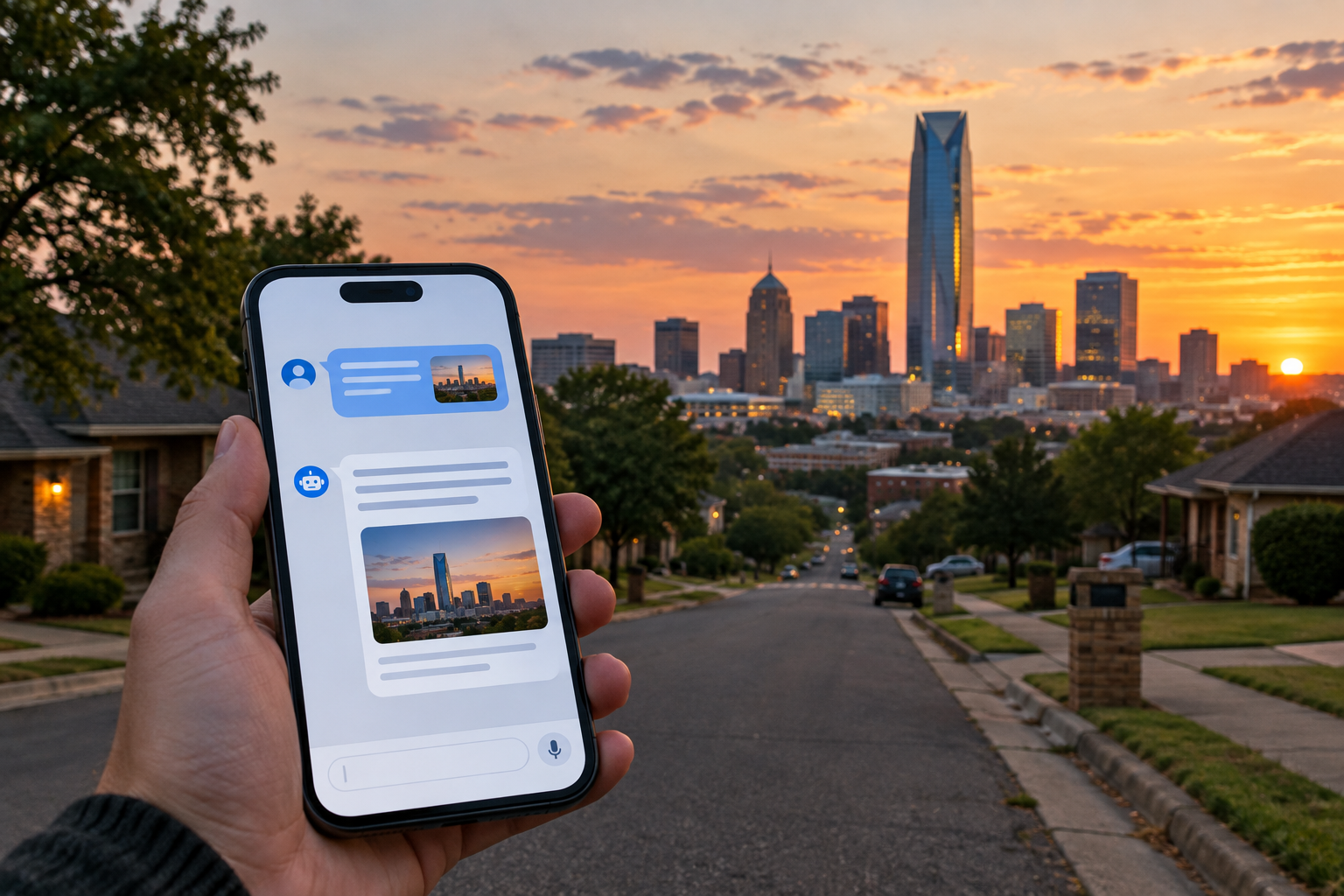
Picture a homeowner who finds a water stain on the ceiling. Not long ago, they searched, opened three roofing websites, compared them and called one. Today they might ask ChatGPT what a ceiling stain after rain usually means, then ask Google who handles emergency roof leak repair nearby, read the AI Overview, glance at the map pack and call a company named in the summary. They may never open a contractor website before picking up the phone.
If your company was named, you got that call without a recorded visit. If it was not, you lost a lead that never shows up in your analytics, because the homeowner never arrived.
From click-based to citation-based search
In click-based search, success meant earning the visit. In citation-based search, success means being the source an answer is built from, or the business the answer names. A contractor needs both:
- Ranking still matters for homeowners who scroll, compare and click.
- Being cited matters for homeowners who decide from the answer alone.
A roofing company that optimizes only for ranking competes for the part of search that still ends in a click. A company that also earns citations is present in the answer, whether or not anyone clicks.
How do AI search results decide which roofer to name?
The engines do not publish a full formula, and each one weighs signals differently, so none of the following is a guarantee. These are habits that make a roofing page easier to quote and a roofing business easier to describe accurately:
- Clear, self-contained answers. A passage that makes sense on its own can be lifted. A paragraph that opens with "As mentioned above" is hard to quote.
- Consistent business facts. Your name, service area, services and contact details should match across your website, your Google Business Profile and your directory listings. Conflicting details make you harder to describe with confidence.
- Verifiable specifics. Materials you install, warranty terms you actually offer, certifications you actually hold, the towns you actually serve. Specifics can be checked and cited. "Top-rated" and "trusted" cannot.
- Evidence from other sources. Reviews, local news coverage, trade association listings and community mentions give an engine corroboration for what your website says.
Most of this builds on the groundwork in our guide to local SEO for roofing companies. The difference now is that you are writing for a reader that quotes, not only a reader that clicks.
How do you do answer box optimization for a roofing website?
Answer box optimization is the practice of shaping your content so search engines and AI assistants can lift it directly into an answer and credit you for it. For a roofing site, it comes down to four habits.
Lead every service page with a direct answer
Open each key page with 40 to 60 words that answer the page's main question outright. On a roof repair page, the first paragraph should say what you repair, where you work and how a homeowner books an inspection. Save the company history for further down. The opening passage is the one most likely to be quoted.
Turn homeowner questions into headings
Write headings the way people ask out loud: "How long does a roof replacement take?", "Does homeowners insurance cover hail damage?", "Should I repair or replace an old roof?" Then answer each one in the first sentence under it. Question-shaped headings mirror the prompts people type into ChatGPT and Google.
Publish the specifics only you can give
Generic roofing content is everywhere. What no one else can publish is your detail: the steps of your inspection, how you document storm damage for an insurance claim, which roofing systems you install, what your workmanship warranty covers and for how long. Write it plainly, and leave out any claim you cannot back up.
We hold our own website builder to the same rule. It will not publish a rating, review count, year in business, credential or award without a source on file. Words the owner types become a dated source, and claims the AI invents are refused. Apply that test to your own pages before an engine does.
Keep facts identical everywhere they appear
Audit your Google Business Profile, your website footer, your contact page and your top directory listings. Use the same business name, the same service area, the same phone number and the same list of services. Our guide to ranking on Google Maps after storms covers the map side of this in detail.
How can a roofing company improve its ChatGPT visibility?
You cannot judge ChatGPT visibility by searching your own name once. Answers vary by phrasing, by location and by engine, so the check has to be repeatable.
Test the prompts homeowners actually use
Make a list of 15 to 20 questions a homeowner in your service area would ask. Mix urgent prompts ("emergency roof repair near me"), research prompts ("metal roof vs asphalt shingles") and decision prompts ("best roofing company in [your town]"). Run them in ChatGPT, Gemini, Perplexity and Google, and note three things each time: whether you are named, how you are described, and which competitors appear instead.
Measure across every engine, not just one
Homeowners do not all use the same assistant. Some ask Google, some ask ChatGPT, some ask Meta AI inside an app they already have open. Being named in one engine and absent from the other eight is a partial result at best. AI visibility tracking across nine answer engines shows whether your business is named by ChatGPT, Gemini, Claude, Grok, Manus, Google AI Overviews, Perplexity, Meta AI and DeepSeek, so you can see where the gaps are instead of guessing.
Earn mentions beyond your own site
Answer engines draw on more than your website. Ask satisfied customers for detailed reviews that mention the service and the town. Get listed with your local chamber of commerce and any manufacturer certification programs you qualify for. Each independent mention is another source that corroborates who you are and what you do.
How should contractors measure success when clicks drop?
If a homeowner decides inside an answer box, sessions and click-through rate will undercount your real visibility. Fewer clicks can sit alongside steady calls. Track metrics that reflect the new path to a lead:
- Citation presence: how often your company is named across answer engines for the prompts that matter.
- Impressions versus clicks: rising impressions with falling clicks is the signature of zero click search, not proof of a failing site.
- Profile actions: calls, direction requests and website taps from your Google Business Profile.
- Leads from your own forms and calls: the number that pays the bills, tied back to where each one came from.
That last metric is the one to anchor on, because ad and analytics platforms each report their own version of conversions and the numbers rarely match. TruLata counts leads from your own forms, and its lead tracking records each lead, its source and its outcome. You can then check whether being named in answer engines is turning into real enquiries.
What should a roofing contractor do about zero click search this month?
You do not need to rebuild your website. Work through these steps in order:
- Week one: Write your list of 15 to 20 homeowner prompts and test them across ChatGPT, Gemini, Perplexity and Google. Record where you are named and where you are missing.
- Week two: Rewrite the opening paragraph of your five most important service pages as a direct, self-contained answer of 40 to 60 words.
- Week three: Audit your business details across your website, Google Business Profile and top directories. Fix every mismatch.
- Week four: Add an FAQ section to your main service pages using real questions from your customers, and ask your last ten satisfied customers for a detailed review.
Then repeat the prompt test and compare it with week one. You are looking for a trend: are you named more often than you were a month ago?
How can TruLata help your roofing company get named in AI answers?
TruLata puts the measurements from this guide on one screen: AI visibility across nine answer engines, search rankings and reviews, ads, content, outbound and email, plus the leads counted from your own forms. The screen refreshes when a person opens it, and every outbound send waits in a review-first queue until you approve it. Addy, the orchestrator inside TruLata, takes requests in plain English, starts a team of AI agents on the work, checks what they bring back and waits for your OK on anything public. The how it works page walks through the steps: connect, pull, brief, act.
Plans are flat monthly and month to month, with no setup fee: Starter is $399 a month, Launch is $649 a month and Growth is $1,199 a month. Command is scoped per engagement. The pricing page lists what each tier includes. To see real data before you decide, open the live demo, or sign up at login.trulata.com/signup.